


What Is T.A.P. Gel and How Is It Different From Builder Gel?
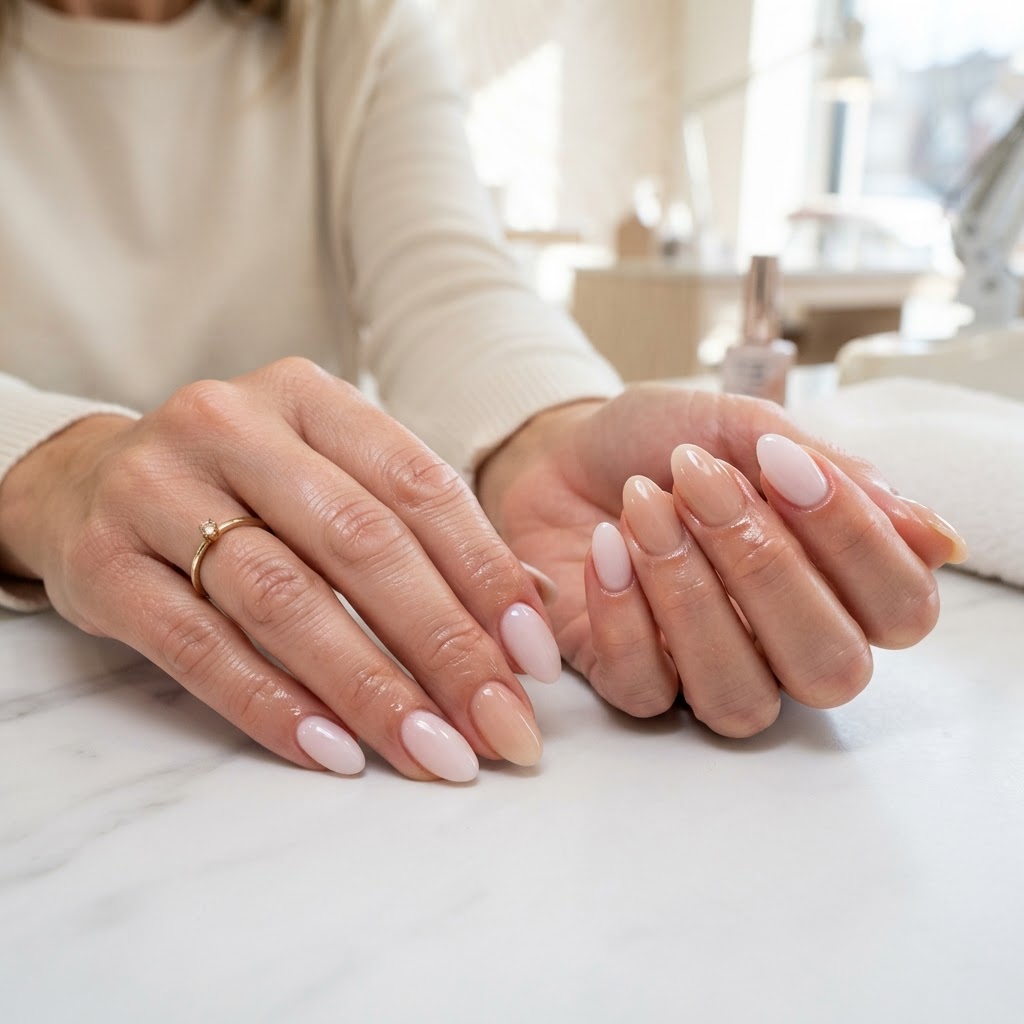
T.A.P. Gel — short for Touch And Press Gel — is a type of builder gel that is applied and shaped by pressing it onto the nail rather than brushing it on like traditional builder gel. Both products add strength and length to natural nails, but the application method and consistency differ in a few meaningful ways. If you've heard both terms tossed around and wondered which one you're actually getting, this guide breaks it all down.
What exactly is T.A.P. Gel and how does it work?
T.A.P. Gel nails use a thicker, self-leveling gel formula that the technician touches and presses into place on the nail plate rather than painting it on with a brush. Because the gel is pre-portioned and pressed, it tends to create a very even, dome-shaped apex — the highest point of the nail — with consistent thickness across every nail. The product then cures under a UV or LED lamp just like other gel enhancements. The technique takes a steady hand and some practice, which is why results can vary depending on the skill of the technician performing it.
How is T.A.P. Gel different from traditional builder gel?
Traditional builder gel is a brush-applied product that the technician paints onto the nail in thin layers, building structure gradually. T.A.P. Gel uses the same gel chemistry but comes in a thicker, more moldable consistency designed to be pressed and sculpted by hand or with a capped finger rather than a brush. You can learn more about how builder gel enhancements work at Van Spa & Nails if you want a side-by-side look at what each service includes. The key practical difference is that T.A.P. Gel can be slightly faster to apply on some nail shapes, while traditional builder gel gives the technician more control over very flat or problem nail beds.
Which nail shapes and lengths work best with T.A.P. Gel?
T.A.P. Gel is versatile and works well on short-to-medium lengths as an overlay, or with nail tips for added length. It suits rounded, oval, squoval, and almond shapes particularly well because the self-leveling quality helps maintain a natural-looking curve. Very long stiletto or coffin extensions may be better served by traditional builder gel or polygel, which give the technician more sculpting flexibility at extreme lengths. If you're unsure which product matches your nail goals, the technicians at Van Spa & Nails in Lakeland can look at your natural nails and make a recommendation before you commit.
How long does a T.A.P. Gel set typically last?
With proper prep and aftercare, a T.A.P. Gel enhancement generally lasts two to four weeks before a fill is needed — similar to other builder gel services. Longevity depends on how fast your natural nails grow, how much your hands are in water, and whether you wear gloves for cleaning or dish work. Chipping or lifting before two weeks usually points to prep issues like residual moisture or oil on the nail plate, not a flaw in the product itself. Maintenance fills every two to three weeks keep the enhancement looking fresh and prevent lifting at the grow-out line.
What does the T.A.P. Gel application process look like step by step?
Knowing what to expect helps you feel comfortable in the chair. Here is a typical application sequence:
- Consultation — The technician checks nail health and discusses your desired shape and length.
- Prep — Nails are trimmed, cuticles pushed back, and the nail plate lightly buffed to remove shine and oils.
- Dehydration and primer — A dehydrator and/or primer is applied to create a clean bonding surface.
- Base coat — A thin gel base is cured under the lamp.
- T.A.P. Gel application — The technician portions out a bead of gel, presses it onto the nail, and shapes the apex before curing.
- Shaping and refining — After curing, the enhancement is filed and buffed to the final shape.
- Top coat — A gel top coat is applied and cured for a glossy or matte finish.
The whole process typically runs 60 to 90 minutes depending on length and any nail art you add.
Is T.A.P. Gel safe for everyone?
For most healthy adults, T.A.P. Gel is a safe and well-tolerated enhancement. People with known gel or acrylate allergies should discuss this with the technician before booking, as builder-type gels share similar chemistry with other UV-cured nail products. If you have a nail infection, open skin around the nail, or a condition like diabetes or circulatory issues that affects your hands, please check with your doctor before getting any nail enhancement — a nail technician cannot diagnose or treat nail or skin conditions. You can browse the full range of enhancement and care options on the Van Spa & Nails services page to compare what might work for you.
Frequently Asked Questions
Can I get T.A.P. Gel over my natural nails without tips? Yes — T.A.P. Gel works great as a natural nail overlay, adding strength and a finished look without adding length.
How do I remove T.A.P. Gel without damaging my nails? Soak-off removal with acetone or gentle filing by a licensed technician is the safest approach; avoid peeling or forcing the product off, as this can thin the natural nail.
Is T.A.P. Gel the same as hard gel? Not exactly — T.A.P. Gel is a builder-style gel that can often be soaked off or filed down, while traditional hard gel is thicker and must be filed off entirely; ask your technician which category the specific product they use falls into.
Whether you're curious about tap gel nails, classic builder gel, or any of the other enhancements we offer, Van Spa & Nails in Lakeland is happy to walk you through your options. Our team of 40 nail technicians welcomes walk-ins, and free parking is always available. Ready to book? Schedule your appointment online or call us at (863) 858-2200 — we're open Monday through Saturday 9 AM to 7 PM and Sunday 10:30 AM to 5 PM.